If I didn’t get to Sydney, I would have lost my eyesight, it’s that simple.
When sight is at risk, access to Sydney Eye Hospital's specialist eye care matters. For people living outside metropolitan areas, distance, time, and cost can prevent patients from getting sight-saving treatment. Bob’s story shows what’s possible when care is guided by need, not postcode. With timely access to specialist eye care, eyes can be saved, sight protected, and lives changed.
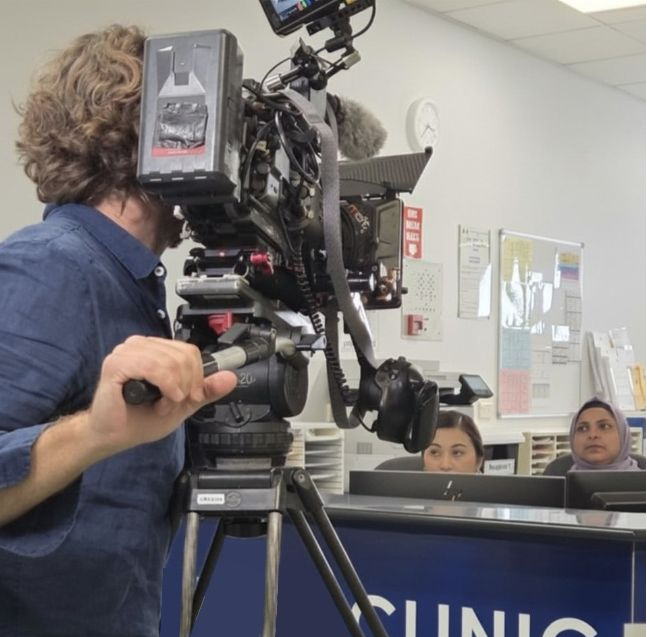
Watch: Bob shares his story in his own words.
A morning that changed everything
Bob never imagined that waking up one morning with something wrong in his eye would threaten his sight — or his life. “I thought I just had something in my eye,” Bob says. “I went outside, covered my good eye, and I couldn’t see my car.”
What had seemed like an irritation quickly became something far more serious. That moment was terrifying, especially living in a remote part of NSW, and Bob knew he needed urgent help.
When time is critical
Bob travelled to his local hospital in Lightning Ridge, where doctors quickly recognised the seriousness of his condition. Understanding how critical the time was, they contacted Sydney Eye Hospital for specialist advice.
Bob was transferred to Sydney as a priority, where Sydney Eye Hospital specialists discovered that a blood clot had travelled behind his eye and was bleeding.
“The doctor told me I was a very lucky man,” Bob recalls. “If it had gone into my brain instead of my eye, I wouldn’t have got out of bed.”
His life was saved — and just as importantly, doctors were able to stabilise his eye.
Damage — but not the end
Although Bob was no longer in immediate danger, the bleeding caused permanent damage to the lens in his eye. Over time, a cataract developed and, since November 2025, Bob has had no vision in his right eye. “The doctor said it’s like rubbing blood on a window — you just can’t see through it.” The impact was profound. Bob feared blindness would be permanent and that his life as he knew it was over. “I was scared,” he says. “I thought of blindness straight away — for the rest of my life. I didn’t think they could fix it.”
Saving sight through access to care
What changed everything for Bob was access to specialist eye care. When he arrived at Sydney Eye Hospital, doctors told him his eye could be repaired.
Bob underwent urgent treatment to stabilise the damage and has remained under specialist care since. He has now undergone further surgery, including procedures to replace the damaged lens and remove the cataract— treatment doctors say may restore his sight.
“They’ve told me it’s fixable,” Bob says. “That’s what keeps me going. I just want my sight back.”
Watch: Bob reflects on what access to specialist eye care meant for him.
Being able to return to Sydney Eye Hospital for ongoing treatment has been critical. Support to help cover long‑distance travel and accommodation costs meant Bob could keep attending appointments — without that help, continuing care wouldn’t have been possible.
Living with vision loss — and hope
Living without vision in one eye has changed Bob’s daily life in ways he never expected. Simple tasks now require more caution, particularly when he is at home in the bush.
“You trip. You fall. You don’t feel safe — especially out in the bush,” he explains.
The loss of depth perception means Bob can no longer work on farms or around heavy machinery — work he has done since he was 16. Adjusting to those changes hasn’t been easy, but knowing his sight may still be restored has given him hope.
Distance should never decide the outcome
Getting to Sydney Eye Hospital hasn’t been easy. The first time, doctors organised an emergency flight to get Bob the care he needed in time. Since then, Bob has made multiple return trips for follow‑up appointments, travelling over 830km by car, bus and train.
“It’s expensive — fuel, food, accommodation. It all adds up,” Bob says.
For many regional and remote patients, these costs become the biggest barrier to care — even when treatment exists.
“If I didn’t get to Sydney Eye Hospital,” Bob says, “I would have lost my eyesight. Simple as that.”
When people notice — and step in
In the early stages of Bob’s treatment, members of his local community helped raise the money he needed to travel to his appointments. That support enabled him to get to Sydney when every appointment mattered.
Later, when Bob cancelled a scheduled follow‑up appointment, a nurse at Sydney Eye Hospital noticed and reached out to ask why. When Bob explained that he couldn’t afford to return, hospital staff connected him with support through the Sydney Eye Hospital Foundation, helping cover travel and accommodation so he could continue treatment.
That moment made all the difference. It meant Bob could keep returning for care — rather than missing appointments and risking his sight.
Giving back — and protecting the next generation
Today, Bob works as a School Learning Support Officer, helping children in classrooms every day. His experience has changed how he talks to students about health and safety. “I’m always telling the kids — protect your eyes. It must be a priority,” he says. “Sight is important. And when it’s gone, it changes lives forever.” By sharing his story, Bob hopes others will understand how fragile sight can be — and why access to care matters.
Looking ahead
Bob continues to be under the care of specialists at Sydney Eye Hospital. Having recently undergone further surgery, his focus is now on recovery and preserving his remaining sight.
“I’m a bit nervous,” Bob admits. “I just hope my sight is saved.”
For patients like Bob, ongoing access to specialist eye care remains essential — not just for treatment, but for hope of a future with sight.
Why this matters
Bob’s story reflects the reality faced by many Australians living outside metropolitan areas. When access to specialist care is delayed by distance, time or cost, outcomes can change — even when effective treatment exists.
Bob’s experience shows what’s possible when access to eye care is guided by need, not postcode. With the right care at the right time, eyes can be saved, sight preserved, and lives can continue.
By sharing stories like Bob’s, we hope patients feel heard — and less alone in their eye care journey.
Thank you, Bob, for sharing your story and for taking the time to read it.
We appreciate you for standing with patients like Bob and helping make access to eye care fairer.
With sincere thanks,
Sydney Eye Hospital Foundation